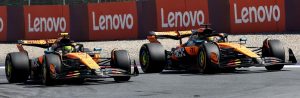
Ah, Monaco. The crown jewel of Formula 1. Sun-drenched streets, superyachts, celebrity cameos (yes, Kim Kardashian was there, because of course she was), and — if you’re Charles Leclerc — yet another opportunity to be absolutely betrayed by your own car while the entire principality watches in stunned silence. If there’s a more poetic form of torture than being a Monaco-born Ferrari driver who can’t stop crashing at home, we’d genuinely like to hear it.
But this time, dear reader, the drama didn’t just stay on track. It went full diplomatic incident. It spilled into press releases, stock markets, and the kind of passive-aggressive corporate language usually reserved for boardroom fallouts. Ladies and gentlemen, welcome to the most gloriously Italian crisis in recent motorsport memory: the Ferrari-Brembo Brake Saga of 2026. Grab an espresso. This one’s a long stop.
A Love Story Older Than Your Uncle’s Ferrari Poster
To truly appreciate how awkward this all is, you need to understand the sheer depth of the Ferrari-Brembo relationship. This isn’t some casual supplier arrangement — this is a 50-year Italian love story, the kind your grandparents would describe with misty eyes and dramatic hand gestures.
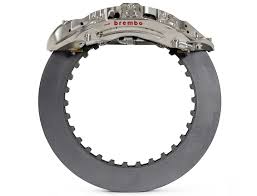
Ferrari was founded in 1947, Brembo in 1961, and for the first time in 1975, their paths crossed thanks to the supply of cast iron brake discs for the F1 single-seaters of the Prancing Horse team. And what a debut it was. The official debut in Formula 1 coincided with the Monaco Grand Prix, and the result was legendary: a victory with Niki Lauda, who that year led Ferrari to both the Drivers’ and Constructors’ Championships. That’s right — the very first time Brembo brakes appeared on a Ferrari in Monaco, they won. Which makes what happened in Monaco 2026 either deeply ironic, deeply symbolic, or just deeply unfortunate, depending on your disposition.
The collaboration between Ferrari and Brembo goes beyond component supply; it is a true multidisciplinary effort involving design, testing, development, and trackside support. This partnership has seen the testing and track debut of some of Brembo’s most revolutionary solutions, such as the first monobloc caliper in the early ’80s, and the spline mounting system for carbon brake discs in the early 2000s. In other words, for half a century these two Italian powerhouses have been inseparable — like pasta and parmesan, or Ferrari and controversy.
Starting in 2026, Brembo renewed its historic collaboration with Ferrari, confirming its role as Technical Partner — extending not only to Scuderia Ferrari HP in Formula 1, but also to the Ferrari Hypercar in the FIA WEC championship. The ink on that renewal deal was barely dry. The champagne from the signing ceremony probably hadn’t even been fully consumed. And then Monaco happened.
Three Brakes, Zero Chill: Charles Leclerc’s Nightmare
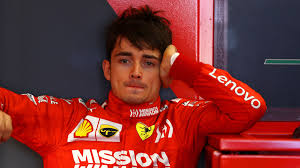
Now, if you’re going to have a catastrophic mechanical failure that ends your home race and sends you barrel-rolling into a wall in front of your family, friends, and the entire royal family of your home nation… you might as well be completely, unapologetically honest about it. And Charles Leclerc — bless his soul — absolutely was.
Leclerc was left furious after crashing out of his home race during a rolling restart following a safety-car period, at which point he had been on course to finish third. The Monegasque had also crashed in qualifying a day earlier, and after both incidents suggested that the car parts rather than his driving was the cause.
But it was his post-race radio and media comments that truly lit the fuse. “It’s like I had no rear brakes at all. And yeah, that’s what I’m dealing with since two races now,” he fumed. And then, with the kind of precision that only a racing driver armed with fresh telemetry data can muster, he got even more specific. “Out of the four brakes, I had three brakes not working. In an F1 car, it’s never a good thing. The front left was working well, the front right was half working, and the two rear brakes were not working at all. And when I say at all, it’s on the data, there’s no deceleration at all.”
Let that sink in. Three out of four brakes. Not working. On the streets of Monte Carlo. During a restart. In front of his home crowd. If there is a karma debt being repaid here, Charles Leclerc must have done something truly spectacular in a past life.
Leclerc insisted he does not hide behind excuses when he is at fault: “I’ve always been very honest, and however many mistakes I make, I would hate to look in the mirror and see myself making excuses when I make a mistake. That’s why I’m always straightforward when I’m in front of the camera, but today I take no responsibility for this.”
Importantly, this wasn’t a one-race blip either. The Scuderia Ferrari driver revealed he had been managing a braking issue that dates back to as far as the Canadian Grand Prix. Canada. That was two races ago. So Ferrari and Leclerc had been circling this problem like two people in a relationship who know something is wrong but refuse to have the conversation — until it finally erupted in the most dramatic setting possible.
The new 2026 car characteristics mean stopping power is already on the edge, and with Leclerc being a bit less aggressive on the brakes than teammate Lewis Hamilton, combined with circumstances where brake temperatures are incredibly hard to maintain, there was a perfect storm. Technical analysis from respected La Gazzetta dello Sport analyst Paolo Filisetti pointed to something even more nuanced: the cause could be a combination of factors and adjustments specifically related to the energy regeneration system on the rear brakes and the operating temperature range of the discs and pads. At Monaco, which demands almost no deep braking at the end of long straights, disc temperatures can plunge and go totally cold if there is too much reliance on harvesting energy to slow the cars down — too cold to ensure high friction between the discs and pads.
Leclerc knows a thing or two about disappointing home races, such as the bungled pitstop in 2022 that cost him a first win on his own streets. At this point, Monaco appears to have a personal vendetta against the man. The circuit should honestly just send him a formal written apology.
Brembo Fires Back: “Astonishment” in Italian
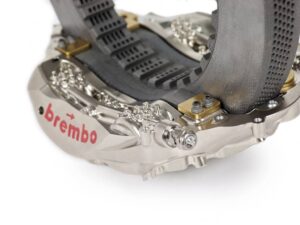
Now here’s where it gets really good. Because faced with a global broadcast interview in which a Ferrari driver told the entire planet that their brakes were, and we quote, “borderline dangerous” — Brembo didn’t just nod along quietly. They came out swinging. Politely. With a press release. In the most aggressively diplomatic tone possible.
“The Brembo Group expresses great astonishment regarding what happened to Charles Leclerc during the Monaco Grand Prix and is very surprised by the statements made by the driver after the race,” it began. “Astonishment.” That is doing a lot of heavy lifting in one sentence. That is the corporate equivalent of saying “excuse me?!” while adjusting your glasses.
Brembo pointed out that at present, the company does not know the causes of the issues experienced by Leclerc and therefore considers it premature to draw definitive technical conclusions before the available data has been analysed. In cases such as this, it is necessary to examine the telemetry data together with the team’s engineers in order to accurately determine the origin of the incident. Translation: “Don’t blame us. We don’t even know what happened yet. Please stop talking.”
The statement also couldn’t resist reminding everyone — diplomatically, of course — of just how important Brembo is. “Brembo is a benchmark in F1 and is present on every car on the grid through its braking technologies. Over the years, F1 teams have continued to choose Brembo solutions, recognising their reliability, innovation and world-class performance.” This is a company statement. But it reads like someone saying “Do you know who I AM?”
The fallout wasn’t limited to PR either. Brembo shares fell from 11.21 euros before the Monaco weekend to 11.04 when trading resumed on Monday, a drop of about 1.5 percent. That’s right — one disgruntled Monegasque driver in a post-race interview managed to briefly dent the stock market valuation of a global braking giant. Charles Leclerc: accidental financial analyst.
Spain Beckons: Lewis Hamilton’s Setup as the Answer
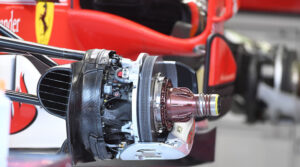
So what does a man do when his brakes have humiliated him in front of his home crowd for the third consecutive year in some form or another? He looks across the garage. And he copies his teammate’s homework. Lewis Hamilton successfully lobbied Ferrari to adopt brake discs manufactured by Carbon Industries — the exact supplier he relied on throughout the most dominant years of his Mercedes career. The shift was a calculated demand by Hamilton to recapture the precise bite, predictability, and brake feel he spent a decade perfecting in Brackley. While Leclerc was sliding into barriers in Monaco, Hamilton was finishing second. Comfortable. Controlled. With working brakes.
Since the Japanese Grand Prix, Hamilton persuaded Maranello to adopt discs made by Carbon Industries. Starting at Barcelona, Charles Leclerc will test the same brake setup that Hamilton uses. The move reportedly focuses more on improving brake feel than changing the quality itself — though in Leclerc’s case, “brake feel” and “the ability to actually stop the car” appear to be closely related concepts.
“The only thing I can say is that we have the solution in-house, and I’ll go to Lewis’s configuration from the next race onwards, which hopefully will be a step,” Leclerc said, with the weary resignation of a man who has been fighting a war for several races and has only just been handed the correct weapon.
Ferrari boss Frédéric Vasseur was measured in his response. “For Charles, it was obviously a very frustrating outcome. We experienced brake issues throughout the weekend and something was clearly not working as it should.” Which is, honestly, the understatement of the 2026 season so far.
Conclusion: When the Brakes Come Off
Let’s be real about what just happened here. A 50-year partnership between two of Italy’s most iconic motorsport brands nearly became a diplomatic crisis because a racing driver — justifiably frustrated and armed with data — called out a problem that he’d been nursing for two consecutive race weekends. And the resulting fallout moved stock prices, generated global headlines, and apparently required a formal corporate press release at 10pm on a Sunday night.
Is Brembo entirely to blame? Probably not. Ferrari and Leclerc are not alone in using the Brembo brake and disc elements — it is understood that five teams on the grid run the same components. So with Leclerc being the only one who hit trouble with this, it points to a situation where either he or Ferrari were doing something different to others. The 2026 regulations’ deep integration of energy recovery with braking is genuinely new territory, and the complexity of keeping brake discs in their operating temperature window at a circuit like Monaco — where regeneration does most of the heavy lifting — is a legitimate engineering challenge.
But here’s the thing: Leclerc’s first DNF of the 2026 season drops him to fourth in the drivers’ championship, 81 points behind championship leader Kimi Antonelli. That isn’t just a bad weekend. That’s a championship wound. Every point matters when you’re 81 adrift of a driver who has now won five races in a row.
The switch to Carbon Industries discs for Spain is less a technical tweak and more an act of institutional humility — Ferrari and Leclerc quietly admitting that Hamilton’s instinct about brake feel was right all along. And for a team that prides itself on being la Scuderia, copying your own teammate’s setup after a public meltdown isn’t exactly the narrative you want going into the Spanish Grand Prix.
What this saga really illustrates is the razor-thin margins of modern Formula 1. A brake disc operating slightly below its ideal temperature window, combined with new energy recovery regulations and one driver’s natural braking style being less aggressive than the other’s — and suddenly you have a Monaco DNF, a Brembo press release, a dip in Italian stock markets, and approximately three million think pieces. Including this one.
For Leclerc, Spain represents a reset. A fresh start. New brakes, new hope, and — dare we say — a renewed desire to finally have a weekend where the biggest controversy is his hairstyle, not his stopping distance. For Brembo, the telemetry review is ongoing and conclusions are “premature.” Which is the most expensive word in motorsport.
And for Ferrari — fifty years of partnership, one very bad weekend, and a whole lot of data to analyse. The love story between Maranello and Bergamo isn’t over. But right now, they’re sleeping in separate rooms.