
The 2025 Chinese Grand Prix at the Shanghai International Circuit was an eventful race that could shape the trajectory of this year’s Formula 1 championship. From McLaren’s resurgence to Ferrari’s costly disqualifications, the race exposed the strengths and weaknesses of the grid’s top contenders.

McLaren’s Statement Victory: A New Era?
Oscar Piastri’s flawless win, leading McLaren’s first 1-2 finish since Monza 2021, wasn’t just about race-day performance—it was the culmination of strategic team development. Over the past year, McLaren has refined their aerodynamic package, maximizing high-speed cornering while reducing drag on straights. This advantage was clear in Shanghai, a circuit that rewards both downforce and efficient straight-line speed.
Piastri’s ability to control the race from pole position was impressive, but just as significant was Lando Norris’ recovery drive. Despite a tough qualifying session, Norris fought through the field, proving the McLaren MCL38’s capability in both, clean air and dirty air—an area where Red Bull has historically excelled.
This result raises a major question: Is McLaren now a genuine title contender? While Red Bull remains strong, its internal struggles and reliability issues could allow McLaren to challenge both the Drivers’ and Constructors’ Championships.
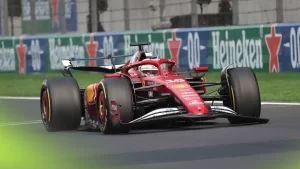
Ferrari’s Disaster: A Self-Inflicted Blow?
While Ferrari has shown flashes of brilliance this season, their double disqualification in China was an embarrassing setback. Both, Charles Leclerc and Lewis Hamilton were disqualified—Leclerc for having an underweight car, and Hamilton for excessive plank wear.
Ferrari’s issues highlight two ongoing problems:
1. Pushing the Limits Too Far
• Ferrari has been aggressive in extracting performance, but this latest failure suggests they are walking a fine line between innovation and rule-breaking. While pushing for performance is expected in F1, technical infractions that lead to disqualifications are costly in the championship battle.
2. Internal Struggles and Team Orders
• Beyond the technical issues, team radio exchanges exposed friction within Ferrari. Hamilton’s frustration with team orders was evident, signaling that Ferrari is still struggling to balance two elite drivers. If this tension continues, it could destabilize the team’s long-term prospects.
The disqualifications dropped Ferrari to fourth in the Constructors’ Standings—level with Williams, a team they wouldn’t have expected to be battling at this stage of the season.
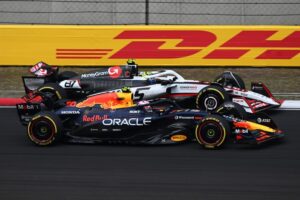
Red Bull: Cracks in the Armor?
For the past few years, Red Bull has been the dominant force in F1, but the Chinese Grand Prix revealed some vulnerabilities.
• Max Verstappen’s Fourth-Place Finish
• While still competitive, Verstappen was unable to challenge for the win, marking another race where Red Bull lacked their usual dominance. Given how well they performed at high-downforce circuits last season, their struggle in Shanghai suggests they might not have adapted their car as well as McLaren.
• Liam Lawson’s Struggles
• Red Bull’s second driver problem continues. Lawson’s 12th-place finish raised questions about whether he is the right fit for the team. Rumors of a mid-season driver swap are intensifying, with Isack Hadjar being considered as a potential replacement.
While Red Bull still leads the championship, their aura of invincibility has been shaken. If McLaren or Ferrari can consistently challenge them, we may see a closer title fight than expected.

Beneficiaries of the Disqualifications: Mercedes and Haas
The post-race disqualifications reshuffled the final standings, benefiting Mercedes and Haas in particular.
• George Russell Secures a Podium
• Russell’s third-place finish continues his solid form this season. While Mercedes isn’t quite at McLaren’s level, they are slowly improving, and Russell’s consistency is keeping them in the fight for valuable points.
• Esteban Ocon and Haas’ Unexpected Gain
• With Ferrari and Alpine suffering setbacks, Ocon secured an impressive fifth place, giving Haas one of their best finishes in recent years. Their ability to capitalize on others’ mistakes will be key to their midfield battle.
Rookie Oliver Bearman also benefited, finishing 10th and scoring another point—a promising sign for his future in F1.

Championship Implications: A Three-Way Fight?
The Chinese Grand Prix proved that 2025 could be one of the most unpredictable F1 seasons in years.
• McLaren’s win shifts momentum
• Ferrari’s disqualifications expose weaknesses
• Red Bull’s struggles leave them vulnerable
While Verstappen remains the title favorite, Piastri and Norris have shown they are serious contenders. Ferrari must regroup quickly, while Mercedes and Haas have reasons for optimism.
With several high-speed circuits coming up, the real test will be whether McLaren’s pace in China translates to more victories—or if Red Bull and Ferrari can strike back.
Final Verdict: A Season That Could Go Down to the Wire
If this race is any indication, the 2025 season won’t be a one-team domination. We could be witnessing the start of a genuine three-way fight for the championship, with McLaren’s resurgence making it more competitive than ever.


