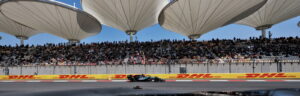
Charles Leclerc pulled off the kind of surprise that even his car had to blink twice — by taking pole position at the Hungaroring, a track he famously calls “clearly my worst”
For the first 40 laps—or until the chassis decided to retire mid‑race undercover—he looked unassailable. He led cleanly off the line, held Piastri at bay, and seemed on course for Ferrari’s first real race win this season
But then he made his second pit stop on lap 40, switching to fresh hards. What followed was less of a charge and more of a slow‑motion crash: Leclerc dropped off the pace drastically, losing around two seconds per lap as the car became “undriveable” due to a mysterious chassis issue. Oscar Piastri breezed past, and then George Russell as well. A five‑second time penalty for Leclerc’s erratic defence was the cherry on a bitter disappointment. Leclerc limped home in fourth, his dreams of victory dashed
He later admitted he had blamed the wing setup mid‑race, only to discover after exiting the car that it was a hardware failure—a fault invisible to the team’s data until then. In short: he radioed his woes too early, but hindsight hits like a Ferrari ploughing into the pits.
Ferrari boss Fred Vasseur conceded it was “quite strange,” saying they feared Leclerc might not even finish the race, given how unbalanced the SF‑25 became in the final stint.
Possible Causes for the Collapse:
Mechanical gremlin: in the chassis, not immediately visible in telemetry, that worsened post‑lap 40
Strategy misstep: Ferrari called Leclerc in early for the second stop, forcing a 30‑lap final stint on medium tyres and even possible traffic behind Hamilton, denying him grip advantage when it was crucial
Frustration compounded pace loss: his exasperation may have contributed to the spiral, and pundits suspect that tire pressures or unusual setup tolerances could have triggered instability.
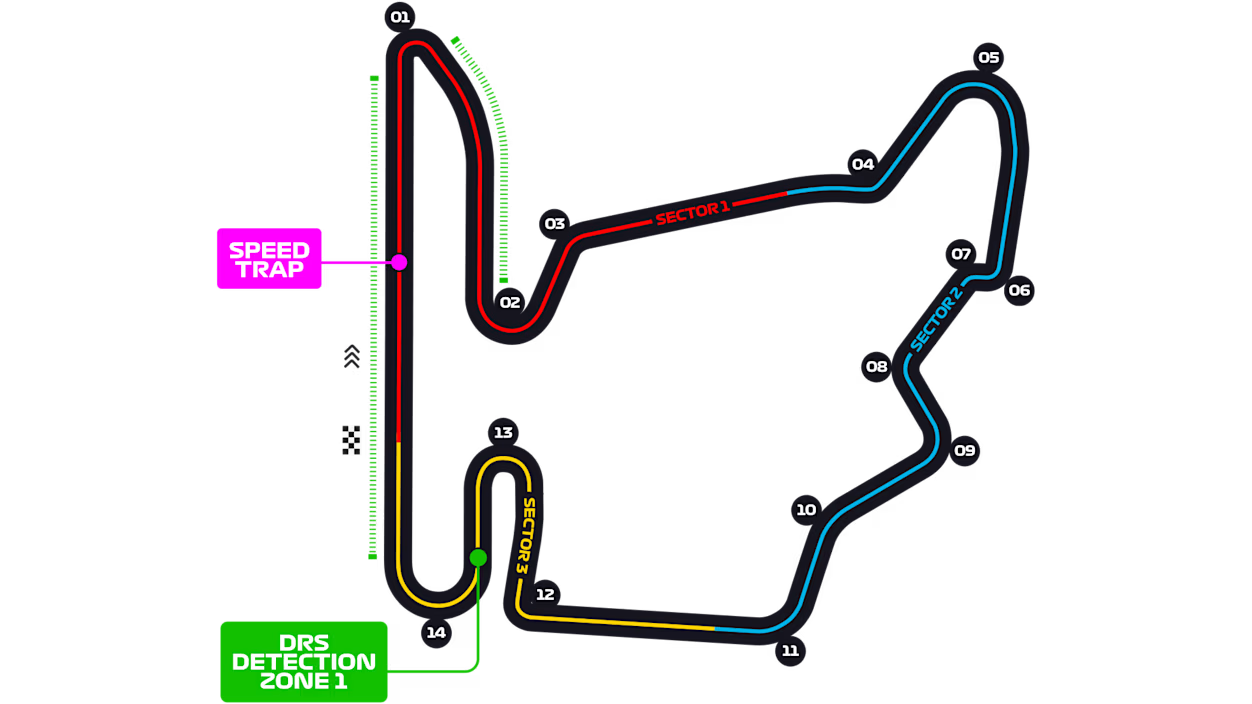
Fernando Alonso: The Masterstroke Maestro
Meanwhile, amid the chaos, Fernando Alonso quietly orchestrated a little Aston Martin renaissance. Starting P5, he kept his cool on a one‑stop strategy, took advantage of the tight Hungaroring, and drove like a man ordering fine wine in a sausage bar — subtle, elegant, but entirely out of place among the chaos. Aston Martin scored their season best with Alonso P5, and Stroll P7
His qualifying effort was sharp—just 0.109 seconds off pole—and despite limited overtaking chances, he maximized track position and stayed clear of the midfield mayhem. That was a masterstroke, pure Alonso: strategic, opportunistic, and vindicating his reputation as racing’s chess grandmaster.
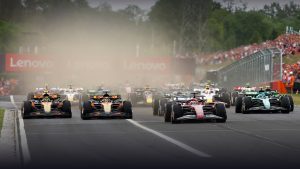
The Ler-Curse
Leclerc’s Hungary GP was a tragicomedy: the universe allowed him pole to tease—but somewhere around lap 40, his car staged a mechanical revolt. The only thing Ferrari could guarantee was that Ferrari would disappoint us. You can almost see the chassis whispering, “I’m gonna pretend I’m fine now, then ruin everything.”
Alonso, by contrast, performed as if he were driving a 1990s Ferrari: smooth, strategic, and infuriatingly effective. While the red cars self-immolated, he sneaked into the top five, reminding everyone why he’s still Alonso.
Ferrari now heads into the summer break licking wounds and investigating mysteries, while McLaren revels in dominance and Aston Martin gets a well‑earned pat on the back.