The 2025 Formula 1 season is poised to be a landmark year, marked by significant regulatory changes and dynamic team developments that promise to reshape the competitive landscape. This comprehensive overview delves into the key rule modifications and provides an in-depth analysis of team prospects for the upcoming season.
Regulatory Changes for the 2025 Season
The Fédération Internationale de l’Automobile (FIA) has introduced several pivotal changes to both technical and sporting regulations for 2025, aiming to enhance competition and address concerns from previous seasons.
Technical Regulations
- Minimum Weight Adjustments: To promote driver well-being, especially for taller and heavier drivers, the minimum driver weight allowance has been increased from 80kg to 82kg. Consequently, the overall minimum car weight without fuel has risen from 798kg to 800kg.
- Driver Cooling Systems: In response to extreme heat conditions experienced in past races, notably the 2023 Qatar Grand Prix, a driver cooling kit will be mandated under specific conditions. When temperatures exceed 30.5°C, a “heat hazard” will be declared, requiring teams to equip drivers with cooling systems. The car’s minimum weight will be increased by 5kg to accommodate this equipment.
- Drag Reduction System (DRS) Modifications: Adjustments have been made to the DRS parameters, reducing the minimum slot gap from 10mm to 9.4mm, while maintaining the upper limit at 85mm when DRS is active. Additionally, regulations now stipulate that the rear wing must have only two positions, ensuring consistent performance when DRS is deactivated.
Sporting Regulations
- Elimination of Fastest Lap Point: The bonus point awarded for setting the fastest lap in a Grand Prix, reintroduced in 2019, has been abolished for the 2025 season. This change aims to prevent strategic manipulations that could unfairly influence championship standings.
- Increased Young Driver Participation: Teams are now required to field a young driver during free practice sessions twice per season per car, doubling the previous requirement. This initiative is designed to provide emerging talent with more exposure and development opportunities.
- Restrictions on Testing of Previous Cars (TPC): A cap of twenty days has been imposed on TPC, with current championship drivers limited to a maximum of 1,000km over four days. Testing is permitted only at circuits featured on the calendar in the current or previous year, with additional restrictions to prevent testing close to scheduled races or on significantly modified tracks.
- Qualifying Contingency Plans: In scenarios where qualifying sessions are canceled, starting grids for sprints and Grands Prix will now be determined based on drivers’ championship standings, providing a clear and fair method to set the grid order.
- Starting Grid Formation Protocols: The final grid will be established one hour before the race start. Cars withdrawn up to 75 minutes prior will be excluded, with subsequent cars moving up accordingly, ensuring clarity and fairness in grid positioning.
Team Predictions for the 2025 Season
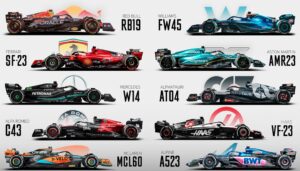
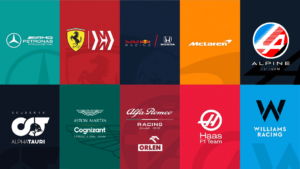
The 2025 season heralds notable shifts in team dynamics, driver line-ups, and strategic directions. Here’s an analysis of key teams and their prospects:
Red Bull Racing
Red Bull enters the season with a formidable pairing of Max Verstappen and newcomer Liam Lawson. Verstappen, a four-time consecutive World Champion, brings unparalleled skill and experience. Lawson’s promotion reflects Red Bull’s confidence in his potential to contribute significantly. The departure of Adrian Newey to Aston Martin may pose challenges in car development, but Red Bull’s established engineering prowess is expected to maintain their competitive edge.
Ferrari
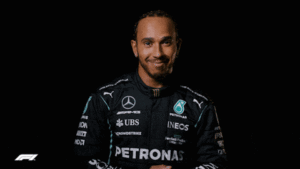
Ferrari’s acquisition of seven-time World Champion Lewis Hamilton to partner with Charles Leclerc has generated substantial excitement. Hamilton’s move from Mercedes signifies a strategic push by Ferrari to end their 16-year title drought. The combination of Hamilton’s experience and Leclerc’s youthful vigor positions Ferrari as strong contenders for both the Drivers’ and Constructors’ Championships.
McLaren
Following a successful 2024 season, McLaren retains the dynamic duo of Lando Norris and Oscar Piastri. Their synergy was instrumental in securing McLaren’s first Constructors’ title in 26 years. With continued development and stability in driver pairing, McLaren is poised to challenge for top honors once again.
Mercedes-AMG Petronas Formula One Team
Mercedes faces a transitional phase with the departure of Lewis Hamilton. George Russell steps into a leadership role, joined by rookie Kimi Antonelli. Russell’s proven talent combined with Antonelli’s fresh perspective could revitalize Mercedes’ campaign, though the lack of Hamilton’s experience may present initial hurdles.
Aston Martin
The recruitment of renowned designer Adrian Newey signals Aston Martin’s ambition to ascend the competitive hierarchy. With Fernando Alonso aiming for his 33rd career victory and the team’s enhanced technical capabilities, Aston Martin could emerge as a formidable force, potentially securing podium finishes and challenging the traditional frontrunners.
Williams Racing
Williams has bolstered its line-up by bringing in Carlos Sainz alongside Alex Albon. This combination of experience and adaptability is expected to drive Williams forward, potentially elevating them from the lower midfield to contesting for points more consistently.
Alpine
Alpine continues with Esteban Ocon and Pierre Gasly, aiming to build on their existing chemistry. Stability in the driver line-up, coupled with technical advancements, could see Alpine making strides towards the upper midfield, challenging for occasional podiums.
AlphaTauri
With Yuki Tsunoda and Isack Hadjar at the helm, AlphaTauri focuses on nurturing young talent. While immediate breakthroughs may be ambitious, the experience gained this year will be par to non.