
Recently, a patent emerged showing that Sony filed (and had granted) designs for a radically different kind of PlayStation controller — one that abandons physical buttons, sticks, and the traditional fixed layout in favour of a touch-sensitive surface where virtual controls appear and can be configured by the player. This has caused an enormous stir online — from excitement that Sony is boldly innovating… to scepticism that this is another Wii-U-style misstep… to outright “please, no.”
Let’s unpack what’s going on, why this could matter, and whether it’s truly practical — or just a clever patent Sony filed because they can.
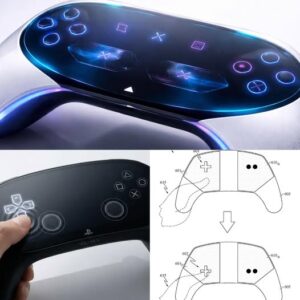
What Exactly Is This Controller Concept?
Here’s the gist: instead of physical buttons and analog sticks, large touch-sensitive areas would detect things like taps, swipes, presses, and gestures. These inputs could appear anywhere on the surface, and users might be able to reposition and resize them to suit their grip, the game being played, or even personal preference. Some versions of the patent even mention sensors for pressure and temperature to prevent accidental inputs and improve recognition quality.
Sony’s patents use a combination of capacitive surfaces and optical/pressure sensors — essentially a controller built like a phone touchscreen but with gaming-specific detection logic. It might even remember different players’ preferred layouts.
And lest you think this patent just popped up overnight: some filings on touchscreen controller tech stretch back years — and Sony has historically patented far more ideas than it ever turns into products.
What’s In It for Gamers?
Accessibility and Customisation
One of the most compelling ideas here is accessibility. A virtual control layout could, in theory, help players with limited mobility or smaller hands adjust the controller to their needs — resizing buttons, changing layouts, or even removing input zones not needed in a game.
This echoes the spirit behind Sony’s existing Access Controller for PS5, which aims to make gaming more inclusive by letting players swap hardware components to suit physical needs.
Adaptive Layouts
For different genres — say, fighting games vs. shooters vs. racing sims — players could switch setups instantly. Want the D-pad on the right? Done. Big buttons for combos? Sure. Less hand movement during UI menus? Easy. That kind of adaptability could make sense where fixed hardware is limiting.
Modern Audience Familiarity
Younger gamers are extraordinarily used to touchscreens — phones, tablets, Steam Deck touch controls, touch menus on laptops. A PlayStation controller that speaks that language might feel modern and approachable to new players, especially those who already game on mobile platforms.
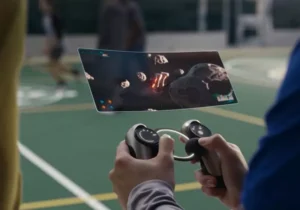
The Big Problem: Tactile Feedback
Here’s the part where things get… awkward.
Old-school button presses feel like input. You know when you’ve hit something because you feel it. With touchscreens, that discipline disappears — unless you simulate it.
Sony has famously leaned into haptic feedback and adaptive triggers with the DualSense precisely to mimic physical sensations even when digital input is involved. But replicating the distinct feel of analogue triggers, D-pads, and shoulder buttons with purely virtual touch zones? That’s a massive challenge.
Without that physical feedback, players may:
• Float thumbs above the surface and make accidental inputs
• Struggle to build muscle memory
• Lose confidence in fast, responsive gameplay
• Find precision inputs harder (especially in competitive games)
These are exactly the criticisms historic touchscreen control schemes receive. Most famously, the Wii U’s touchscreen controller was universally mocked for replacing tactile buttons with flat screens that didn’t suit mainstream play — and gamers still joke about it.
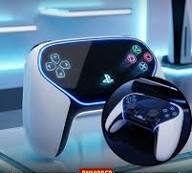
What About Cost Implications?
In theory, adding a huge touch display and advanced sensors to a controller bumps the manufacturing cost. Touchscreens cost more than plastic buttons and printed circuit boards. Add in pressure/heat sensors, optical input systems, and more robust feedback hardware, and — well — you’re getting into price territory that a mass-market gamepad historically never approached.
By contrast, the existing DualSense already costs well north of traditional gamepad prices due to adaptive triggers and haptics, and most gamers are already sensitive to controller pricing. A touchscreen variant could conceivably cost significantly more, which always raises the dreaded question: “Do gamers really want to pay a premium for this?” The consensus among many enthusiasts is at best ambivalent.
Practicality: Does This Solve Real Problems?
Some things might help:
• Accessibility customization
• Custom control layouts for unique games
• Consistent visual mapping across titles
But for most core gameplay — think traditional shooters, platformers, JRPGs, racing titles — physical buttons and sticks are still beloved because:
• They offer consistent tactile feedback
• They do not require looking down at the controller
• They maintain muscle memory built over decades of play
Modern players often recoil at interfaces that demand looking down at the controller to see controls, which is exactly what a touchscreen could force. That’s why most controllers work without displays.
The existing DualSense touchpad? Built in, rarely fully utilised by developers because it’s often not essential to gameplay, which already hints that even optional touch technology isn’t a slam dunk.
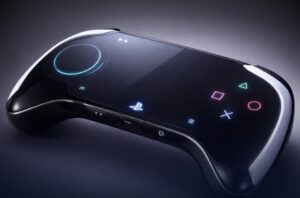
Developer Reality Check
Game developers are notoriously conservative when it comes to input schemes — especially across cross-platform titles. Look at the PS5 touchpad: it’s there, but many games barely use it because:• Not all platforms support it
• It complicates control schemes
• It adds testing overhead
• It’s not essential for core gameplay
If developers barely embraced a single touchpad in addition to buttons, why would they suddenly overhaul entire input schemes for a touchscreen controller?
The Patent Elephant in the Room: It Might Never Ship
Here’s the reality: Sony patents many things. Most of them never become real products. Their touchscreen controller patent was originally filed years ago and only just became public, but that doesn’t mean it’s coming to your living room next year.
Patents are partly strategic — they let a company reserve ideas, build IP walls, deter competitors, and experiment without being committed to manufacture.
Even in articles discussing the technology, analysts caution that this idea could remain on paper or be limited to optional accessories or accessibility-focused variants, rather than replacing the standard controller.
Final Verdict: Future Vision or Fantasy?
Sony’s touch-based controller concept is an ambitious exploration of where gaming input could go — especially from a customisation and accessibility standpoint. It signals forward-thinking R&D that imagines controllers not as fixed objects, but as adaptive surfaces tailored to players.
But between cost concerns, developer adoption hurdles, and the core practicality issue that real games still benefit hugely from physical, tactile input, this design — if it ever becomes a product — is more likely to be the so-called 3rd controller….


