In a move that will surely go down as a masterclass in regulatory confidence, the FIA has confirmed a sweeping package of changes to the 2026 Formula 1 technical and sporting regulations — effective before the Miami Grand Prix on May 3. That’s right: three races into the most hyped rule reset in modern F1 history, the entire paddock got together on a Zoom call and collectively decided that maybe, just maybe, some things needed fixing.
To be fair to the FIA — and we are generously being fair here — a post-season-opener review was always planned. It just wasn’t supposed to involve a driver revolt, a 50G crash in Suzuka, and Max Verstappen publicly musing about retirement. But hey, details.
Let’s walk through exactly what’s been changed, what it means in plain English, and — most importantly — what is likely to actually happen when the circus rolls into Hard Rock Stadium on May 3.
QUALIFYING · ENERGY MANAGEMENT
Stop Harvesting, Start Racing (Please)
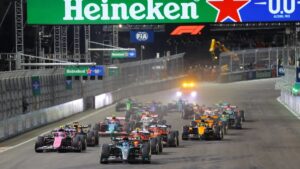
The single biggest complaint since the 2026 season began has been super-clipping — the deeply unglamorous phenomenon where cars dramatically bleed speed on straights while their energy systems hoover up electricity like a Dyson in a disco. Drivers described it as watching their speedometers go backwards mid-lap. Lando Norris said it “hurts your soul.” Norris is not wrong.
The root cause? The new 2026 cars run on a nearly 50/50 split between combustion and electrical power. When the battery is full — which the car aggressively tries to ensure on every single straight — the MGU-K has to cut deployment and recharge instead. The result: cars visibly slowing before corners in a way that looks, frankly, embarrassing in a sport that is supposed to be the pinnacle of motorsport.
QUALIFYING CHANGE #1 — RECHARGE CAP
The maximum permitted recharge has been cut from 8MJ to 7MJ per lap. This reduces the amount of energy the car tries to harvest, meaning less aggressive super-clipping and more consistent flat-out driving. The FIA says this targets a maximum super-clip duration of just 2–4 seconds per lap.
- BEFORE: 8MJ max recharge — cars harvesting like mad
- AFTER: 7MJ max recharge — less harvesting, more driving
QUALIFYING CHANGE #2 — PEAK SUPERCLIP POWER
When super-clipping does occur, the peak power during that phase has been raised from 250kW to 350kW. This means when the car does need to recharge, it does it harder and faster — getting back to full deployment sooner. This change also applies in race conditions.
BEFORE: 250kW peak clip — long, slow recharge drag
AFTER: 350kW peak clip — shorter, sharper recharge burst
QUALIFYING CHANGE #3 — CIRCUIT FLEXIBILITY
The number of events where alternative, lower energy limits may apply has been expanded from 8 to 12 races. This gives the FIA greater flexibility to adapt energy parameters circuit by circuit — acknowledging that what works in Melbourne is not what works at Monaco.
“It still hurts your soul seeing your speed dropping so much — 56km/h down the straight.”
— LANDO NORRIS, JAPANESE GRAND PRIX 2026
RACE CONDITIONS
Closing Speeds That Don’t Kill People
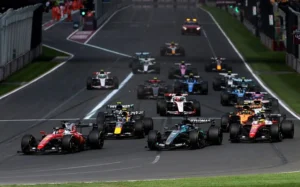
Oliver Bearman’s enormous 50G crash at Suzuka was the moment the season’s fundamental problem became impossible to ignore. The issue: a car running on fresh battery charge can close on a car in its super-clip phase at a genuinely alarming speed differential. You are essentially asking drivers to manage closing speeds that vary wildly and unpredictably depending on what state their opponent’s battery happens to be in. What could possibly go wrong?
The FIA’s answer is a two-pronged race-day change aimed at reducing those differentials while keeping overtaking alive.
RACE CHANGE #1 — BOOST CAP
The maximum power available through the Boost button in race conditions is now capped at +150kW (or the car’s current power level at activation if higher). This directly limits the sudden performance differentials that created dangerous closing speeds. If your opponent is recharging and you hit Boost, you won’t arrive like a missile anymore.
RACE CHANGE #2 — MGU-K DEPLOYMENT ZONES
MGU-K deployment will be maintained at 350kW in key zones — from corner exit to braking points, including overtaking zones — but limited to 250kW elsewhere on the lap. This ensures maximum electric grunt is available exactly where it matters for racing, while smoothing out differentials on high-speed sections.
- BEFORE: 350kW deployment — everywhere, all the time
- AFTER: 350kW in overtake zones, 250kW elsewhere
RACE STARTS
The Car That Stalls at the Start Gets a Robot Friend
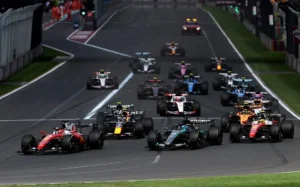
Race starts have been a minor saga in 2026. The complexity of managing electrical systems at the moment of clutch release has created the delightful possibility of a car barely crawling off the line — becoming an impromptu obstacle for seventeen other cars all trying to occupy the same piece of tarmac at 150km/h. The FIA has found a very 2026 solution to this: automation.
STARTS — LOW POWER DETECTION SYSTEM
A new ‘low power start detection’ system can now identify cars with abnormally low acceleration after clutch release, and automatically trigger an MGU-K deployment to give the car a minimum level of acceleration. Flashing rear and lateral warning lights will alert following drivers to the affected cars. The energy counter is also reset at the start of the formation lap to fix a previously known system inconsistency. Note: these start changes will be tested in Miami and formally adopted afterwards.
WHAT THIS MEANS
In plain English: if a driver’s car decides it’s not feeling particularly energetic at the start lights, the system will give it a little electric nudge. Think of it as Formula 1’s version of a parent pushing a child’s bicycle. Dignified? No. Better than a 17-car pile-up at Turn 1? Absolutely.
WET CONDITIONS
Because Florida Is a Swamp
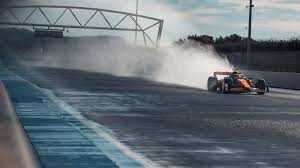
Miami in May. In a city that invented the phrase “sunny with a chance of afternoon apocalypse,” the FIA has also introduced a suite of changes specifically for wet conditions. Whether this is prescient forward planning or the universe gently reminding us that Florida weather cannot be trusted, we leave to your judgment.
WET — THREE CHANGES IN ONE
Intermediate tyre blanket temperatures have been raised following driver feedback, improving initial grip when conditions are marginal. Maximum ERS deployment has been reduced in low-grip conditions, limiting torque and reducing the risk of drivers trying to manage 1,000-horsepower hybrid systems on damp tarmac. Rear light systems have been simplified — clearer, more consistent visual cues to help following drivers react faster in poor visibility.

THE VERDICT
Will Any of This Actually Work?
Here’s where we must resist the temptation of pure optimism and apply the cold water of Formula 1 history. These changes are technically sound. The reduction in recharge limits and the deployment zone approach are, by most engineering accounts, genuinely targeted and sensible. The team principals and PU manufacturer CEOs signed off unanimously, which in Formula 1 is roughly as rare as a dry race in Brazil.
But let’s be honest: the core architecture of the 2026 regulations remains unchanged. The near 50/50 combustion-electric split — which is the fundamental reason super-clipping exists — is still there. What Miami will get is a better-tuned version of the same engine. The yo-yo speed effect that had fans divided will be reduced but not eliminated.
The reduction from 8MJ to 7MJ recharge is targeted at cutting super-clip duration to 2–4 seconds per lap. That’s still noticeable but considerably less than what was seen at Melbourne and Suzuka. The Boost cap at 150kW in race conditions should meaningfully reduce the terrifying closing speed differentials. And the MGU-K deployment zones are a smart compromise — protecting the excitement of overtaking corridors while smoothing the rest of the lap.
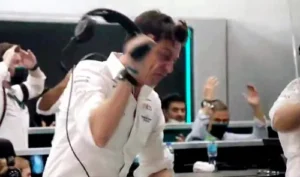
“We need to act with a scalpel and not with a baseball bat.”
— TOTO WOLFF, APRIL 2026
Wolff said it best. These are scalpel changes. The question is whether the patient needed a scalpel or a baseball bat. The FIA seems to believe the former. The drivers, who got almost everything they asked for, are cautiously optimistic. A GPFans poll on the day showed 58% of voters said: “Yes, but I was hoping for more.” Which, honestly, feels like the most Formula 1 response imaginable to any situation.
The other wild card is Miami itself. Hard Rock Stadium is a power-unit-friendly circuit, with long straights and medium-speed corners that should play into the hands of whoever’s hybrid system has found the best operating window under these new parameters. Red Bull, which has been the noisiest about the regulations, may find the circuit suits them, which would be a wonderfully ironic outcome to all of this.
Mercedes, who dominated the first three rounds under the old energy parameters, will be watching closely. Reducing the recharge advantage and capping Boost power could theoretically close the field. Or it could simply reshuffle the order while keeping Mercedes at the front. Either scenario would be entertaining. The race-start automation is perhaps the wildest card of all. Giving a computer the ability to trigger MGU-K deployment at the start is the kind of solution that works brilliantly until it doesn’t — and when it doesn’t in Formula 1, it usually does so in front of 300 million viewers. The FIA is testing it in Miami for exactly this reason. Consider this a preview with the safety net still on.
The bottom line: Miami should be better. The changes are credible, data-driven, and arrived at through actual driver consultation — which is a rarity worth acknowledging. The super-clipping drama should be reduced. The closing speed terror should be blunted. The wet-weather situation should be safer.
Whether this fixes Formula 1’s 2026 problem entirely, or whether it just makes the 2026 problem slightly less visible until the next crisis, is a question only the season can answer. But for one humid weekend in Florida, with the cameras rolling and the pressure at full tilt, the FIA and every team in the paddock will be watching a different kind of data: the faces of drivers who, for the first time in 2026, might actually be enjoying themselves.
That would be the real result of Miami. And it wouldn’t show up in any lap time.