When Andor debuted with its first season, it shattered expectations by offering a grittier, more grounded look at the early days of rebellion in the Star Wars galaxy. Season 2 builds on that foundation and elevates it to new heights, offering a profound character study, political thriller, and moral meditation that places Andor among the finest storytelling Star Wars has ever produced.

Storyline
Andor Season 2 masterfully continues the story of Cassian Andor (Diego Luna), bridging the gap between his early revolutionary days and the hero we meet in Rogue One. The writing leans heavily into slow-burn tension, showcasing the years leading up to the Rebellion’s formal organization. The show resists easy fan service in favour of authentic, character-driven drama.
This season’s narrative is structured around key moments in Cassian’s growing commitment to the cause. We witness his increasing disillusionment with the Empire, his painful sacrifices, and the ethical compromises he must make. The season weaves together multiple perspectives: the underground network of rebels, the iron-fisted Empire, and the civilians caught in the crossfire. Particularly striking are the inner fractures within the rebellion itself — differing philosophies about what it means are justified in the fight for freedom.
The pacing remains deliberate, but this season ramps up the stakes, with several jaw-dropping heists, betrayals, and battles. The final few episodes are riveting, culminating in moments of both devastating loss and soaring hope that perfectly set the stage for Rogue One.

Acting
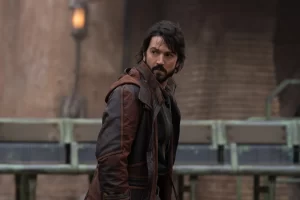
The performances in Season 2 are nothing short of phenomenal. Diego Luna deepens his portrayal of Cassian Andor, capturing the weary determination of a man who knows he must lose pieces of himself for the greater good. Luna’s nuanced performance grounds the show; even his quietest moments feel loaded with emotional weight.
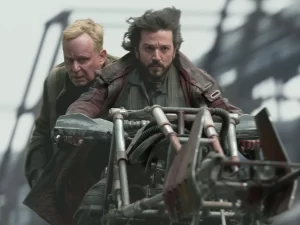
Stellan Skarsgård continues to deliver powerhouse moments as Luthen Rael, embodying the harsh realities of revolutionary leadership with grim charisma. Genevieve O’Reilly’s Mon Mothma has even more screen time this season, portraying with heartbreaking realism the political manoeuvring and personal sacrifices required of a senator trying to foment rebellion from within the heart of the Empire.
New additions to the cast blend in seamlessly, each adding distinct shades to the complex moral landscape. Andor’s mother’s legacy, Bix’s tragic arc, and the chilling coldness of Dedra Meero (Denise Gough) offer a multifaceted view of heroism and villainy.
Thematic Choices
Andor continues to explore mature themes that are often only superficially touched upon in other Star Wars media: the cost of freedom, the moral ambiguity of rebellion, surveillance states, and the corrosion of empires. It does not shy away from depicting the brutality of oppression or the compromises rebels must make.
One of the season’s strongest thematic through-lines is the tension between idealism and pragmatism. Is it worth becoming a monster to fight monsters? Andor does not offer easy answers but instead shows the emotional and moral toll of this question on each character.
Season 2 also does a phenomenal job illustrating how oppression dehumanizes not just its victims, but its enforcers. The depiction of the Empire’s bureaucratic machinery — cold, indifferent, and cruel — feels eerily resonant in a modern context.
How It Factors into the Larger Star Wars Universe
More than any show before it, Andor makes the Star Wars galaxy feel lived-in and real. It fleshes out the socio-political environment in a way that complements the grander mythological elements of the Skywalker saga.
Without Jedi or lightsabers (barring brief references), Andor shows how normal people — bureaucrats, smugglers, farmers, factory workers — contribute to seismic galactic shifts. It provides essential context for the desperation, urgency, and sacrifice seen in Rogue One and, by extension, A New Hope.
The show also carefully connects to other parts of the lore: from name-dropping key figures like Saw Gerrera, to showing the nascent structures of what would become the Rebel Alliance, to the expanding threat of the ISB (Imperial Security Bureau). It broadens the narrative in a way that enhances everything that comes after it without feeling forced or overly expository.
Importantly, Andor shows that rebellion is not born of destiny or prophecy, but of countless hard choices made by ordinary people. In doing so, it re-centres the Star Wars universe on the very idea of resistance against tyranny — arguably the heart of the original trilogy.
Final Thoughts
Andor Season 2 cements the series as not just a great Star Wars story, but a great piece of storytelling, period. Its meticulous writing, stellar acting, complex thematic resonance, and respectful yet bold integration into the larger universe set a new standard for what Star Wars television — and genre television at large — can aspire to be.
If The Mandalorian is a love letter to Star Wars’ mythic heroism, Andor is a sober ballad to the cost of that heroism. It’s thrilling, thoughtful, and, perhaps most importantly, necessary.
Rating: 9.5/10