The penalty fiasco over the last two races has been amusing to say the least. From Ocon’s incredible accumulation in Bahrain to Alonso dram in Jedda.
Has the FIA been wrong or too harsh?
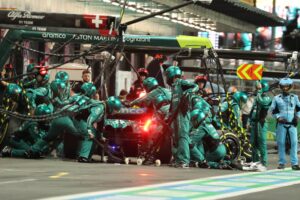
No, they haven’t. in terms of the rules, they have applied the rules correctly. Using Alonso as a case study, there is little doubt that the Aston Martin Pit Crew did breach the rules and the wheel jack did indeed touch the car before the 5 second was over. This has been documented on video and the team has accepted it. However, the dispute was not over the breaking of the rule but rather the delay in issuing out the sanction. This was only given after Alonso had stepped on the podium and accepted his trophy.
Minutes later George Russel was given the position, and of course Aston Martin appealed the decision and even won their case. Then Fernando was re-instated with the third place on the podium.
Penalties Delivered on Time
So here is some food for thought. Most timed penalties, especially those awarded after the (planned) last pit stop is effectively deducted on driver’s final time. No driver is going to come in to serve any time penalty as the time lost far outweighs the time lost via deduction.
The biggest issue that Alonso face was not the penalty but rather the poor timing of it being served after the race. Ashe stated, had this been sanctioned during the race, he would have been able to build the required gap to safely secure his third position.
More so 10second also feels harsh. The point of a penalty is to negate any advantage gained due to breaking of the rules. For the touching of the jack to car, this may have shaved a second of his time, even being generous at 2 seconds it would not have comprised Alonso’s race or gained him and advantage that would have changed the results. However, it can be accepted that 5 seconds is the least time penalty that can be applied.
10 seconds feels like overkill. Over and above that, the evidence to the actual issue was concrete and again no disputed. Therefore, the penalty should have been given with the race.
Shoe Me the Money
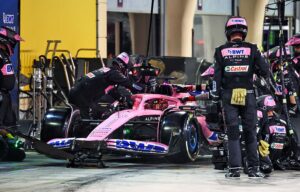
We also need to consider financial penalties that compliment or replaces certain penalties. Again, in the case of Alonso, even breaking the rule did not change his race result (in the end) However, he did break the rules. I do believe that fines should go along this. This helps keep teams in check, as in the new era of budget caps, every cent matters.
So, in case like Ocon, who accumulated a bag full of timed penalties which did not win or lose him points, as he was so far down the order. It will help re-enforce the rule. Who knows the impact it can make in performance gains?
The FIA have an announcement to make before the Australian Gran Prix. I do believe it will be along these lines.