Most superhero universes manage with a handful of powers. DC looked at a rainbow and decided every colour should be a different mental illness with a jewellery budget. It’s called the Emotional Spectrum. Each colour of light is tied to a feeling, each feeling has its own Corps, and each Corps hands out a power ring. This was a small side project until writer Geoff Johns spent years building it into Green Lantern’s backbone. I’ve read the lot so you don’t have to. Here’s the guide.
Green: Willpower (The OG, and Smug About It)
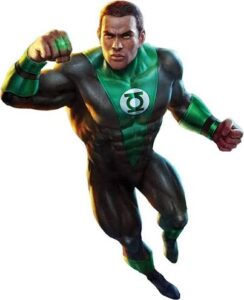
Hal Jordan, a test pilot, first appeared in *Showcase* #22 in 1959, created by John Broome and Gil Kane. A dying alien named Abin Sur crashed on Earth, and his ring searched for someone fearless and honest. It found Hal. Nobody asked whether Hal wanted a second career.
The Green Lantern Corps polices space in 3,600 sectors, with willpower as the fuel. The famous key moment is *Emerald Twilight* (1994), in which Hal loses his hometown, Coast City, goes off the rails, and rebels against the Guardians. A decade later, *Green Lantern: Rebirth* explained that he’d been possessed by Parallax, an actual fear entity. So the greatest Green Lantern was, technically, a victim of a parasite. Handy.
Yellow: Fear (The Sinestro Corps)
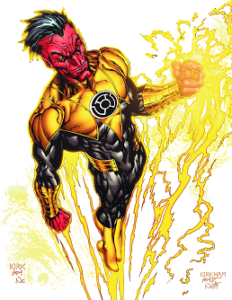
Green rings are weak to yellow because Parallax was locked inside the Green Corps’ central battery for years. This is like building your castle’s front door out of the one material your enemy’s sword cuts best. Sinestro, a former Green Lantern, noticed.
The Sinestro Corps debuted in 2006 and recruits people who inspire great fear. They run on Qward, with two ring-bearers for each of 3,600 sectors. That’s 7,200 recruits, and some of them have a *hermit crab for a head*. The *Sinestro Corps War* is the big moment, an all-out assault on Oa and Earth. Even Batman, the world’s most frightening man in a cape, got offered a yellow ring. He shrugged it off, which is the most Batman thing in this entire article.
Red: Rage (The Cat Is the Best Part)
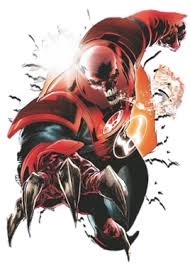
Atrocitus founded the Red Lanterns after the Manhunters, the Guardians’ robot police, massacred his home sector. Red rings replace your circulatory system with corrosive, plasma-like blood that you vomit on people. Writer Geoff Johns called them probably the most violent of the Corps. Artist Ethan Van Sciver has said he was partly inspired by *28 Days Later*.
But the star is **Dex-Starr**, a Brooklyn house cat whose owner was murdered. Two thugs threw him off the Brooklyn Bridge, and a red ring found him before he hit the water. He killed them, slept on their skulls and declared himself a “good kitty”. The character started as a joke from artist Shane Davis and proved so popular that DC kept him. The cat is a better-developed character than half the Justice League.
Orange: Avarice (One Man, Infinite Greed)
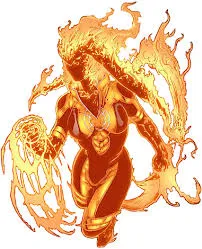
Larfleeze is the only wielder of the orange light. He’s too greedy to share, so his “Orange Lantern Corps” is an army of constructs made from beings he’s killed. Johns says he made up the name by mashing “lard” and “sleaze” together. That’s a sentence I’m delighted is true.
Larfleeze’s best moment is a Christmas special. He discovers Santa Claus, writes a list of everything he wants, gets nothing and goes after every costumed Santa in town. When Hal talks him into giving away his entire hoard, Larfleeze announces he doesn’t like Christmas spirit. In fairness, that’s most of us by the second week of December.
Blue: Hope (Needs Supervision)
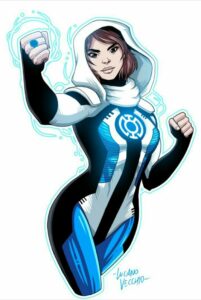
The Blue Lanterns were founded by two exiled Guardians, Ganthet and Sayd, after the Sinestro Corps War. Their rings run on hope, but blue rings reach their full potential only near someone with Green Lantern-grade willpower. Hope on its own is lovely. In a space war, it needs a bodyguard.
Their party trick is that blue light can drain yellow rings and calm a Red Lantern’s rage. In one key moment, Hal Jordan, turned into a Red Lantern against his will, was saved when Saint Walker gave him his blue ring. The Blue Lantern homeworld, in the New 52 era, is Elpis, which is Greek for hope. Subtle.
Indigo: Compassion (The Tribe Nobody Can Understand)
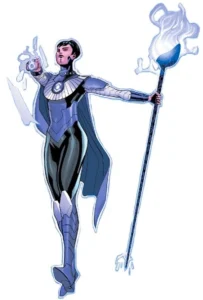
The Indigo Tribe is a mysterious group whose language is so alien that a Green Lantern’s ring, which translates everything, simply gives up. Their leader, Indigo-1, spent *Blackest Night* explaining the cosmology to Hal and recruiting him to assemble a team from the other Corps.
I’ll be honest, they’re the least explained of the lot, which is a strange fate for a group powered by compassion. It’s like building a charity and forgetting to put up a website.
Violet: Love (Star Sapphires)
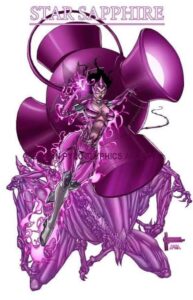
The Star Sapphires hail from Zamaron, powered by the violet light of love. Carol Ferris, Hal’s boss at Ferris Aircraft and his on-off romance, was originally the Star Sapphire. In the early days, a gem controlled her and made her attack the man she loved. A romantic gesture, if your idea of romance is a restraining order.
Over time, the Corps grew into a mostly female force. In *Blackest Night*, a Star Sapphire ring held back Mera’s rage when she was drafted as a Red Lantern deputy. Love, it turns out, is an excellent anger-management course.
Black: Death (Blackest Night)
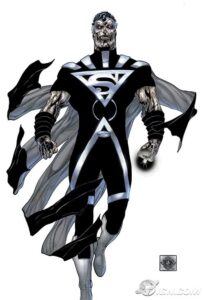
The Black Lantern Corps is made of reanimated corpses, led by Black Hand, with Nekron behind him. Black Hand digs up Bruce Wayne’s body and removes the skull, which is the most “this is a serious event” detail in comic history.
The black rings seek out the dead who matter to the living, so the heroes’ friends and family come back and torment them. Every heart ripped out powers the rings up. It was the big 2009–2010 crossover, and it was brutal. The black rings could not touch Dove (Don Hall), who was at peace in death. If that doesn’t make you tear up, check your pulse.
White: Life (The Cheat Code)
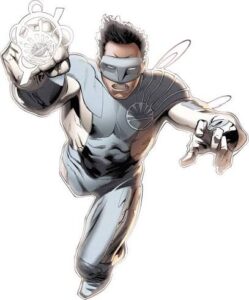
To beat Nekron, Hal merges with the Life Entity, the first life in the universe. The result is the White Lantern Corps, first appearing in *Blackest Night* #7 in 2010. The white light is a combination of all the others. His first act is to resurrect Black Hand, which removes Nekron’s anchor in the living world and wins the war.
In the New 52 era, Kyle Rayner masters all seven lights and becomes a White Lantern. It’s the superhero equivalent of getting a pilot’s licence by reading the manual.
The Others
There are also lesser-known corps. Sources list Gray (sorrow) and Ultraviolet, an invisible-spectrum Corps. Even DC’s creators seem unsure where to stop.
Is the Emotional Spectrum a bit absurd? Yes. A cat has a ring and a skull-hat. But strip away the costumes and it’s a surprisingly honest idea: fear, rage and greed are as powerful as willpower, and hope and love need protection. Anyone who has ever cried at a car advert understands.
Continuity varies a lot across reboots such as the New 52 and DC Rebirth, so details can shift depending on which era you read.