Monza, 7 September 2025. The Temple of Speed, the sea of red, the chants of the Tifosi. The setting was perfect for Ferrari to deliver the fairy tale: new hope, Hamilton in red, Leclerc on form. What could possibly go wrong? Well, if history has taught us anything, it’s that Ferrari at Monza is less a love story and more a tragic opera—loud, passionate, and ultimately doomed by their own stage directions.
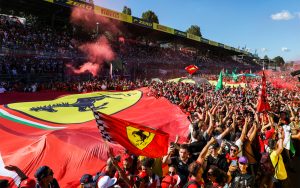
The Sea of Red Dreams… and Then Wakes Up Hungover
The weekend began with optimism. Ferrari looked lively in practice, Charles Leclerc running close to the front and Hamilton turning heads in FP1 by topping the session. For a brief, intoxicating moment, the Tifosi dared to believe they were witnessing the dawn of a renaissance. Lewis Hamilton, in a Ferrari, P1 at Monza—it was almost too poetic to be real. Of course, it was. By FP2, McLaren’s Lando Norris promptly put the red cars back in their place, reminding everyone that papaya, not scarlet, is the colour of efficiency in 2025. Even Carlos Sainz, now strutting his stuff in a Williams, outpaced his old team at times, which must have felt like a polite slap in the face to the Scuderia engineers.

Verstappen’s Pole Lap: Powered by Witchcraft
Qualifying only deepened Ferrari’s identity crisis. Max Verstappen, after a winless stretch dating back to May, decided to stop pretending to be mortal. His Q3 lap was obscene, a 1:18.792 that smashed Lewis Hamilton’s long-standing Monza record. For context, that lap was so quick you’d half expect Verstappen to have activated warp drive. Norris wasn’t far behind, and even Oscar Piastri squeezed under the old benchmark, but Verstappen had reminded the paddock of his natural order: Max first, daylight second. Ferrari, meanwhile, managed a respectable P4 for Leclerc and a P5 for Hamilton, though a grid penalty swiftly dragged the seven-time champion down to tenth. It was the racing equivalent of telling a child they could open their Christmas presents early, only to snatch them away again.

Ferrari’s Downforce Problem: Now with Extra Drama
Come race day, the reality of Ferrari’s situation became painfully clear. The much-discussed “downforce issues” weren’t so much an engineering hiccup as they were a glaring neon sign saying: “We still don’t understand how to make a car work at Monza.” Both cars struggled to balance speed with stability. The straights promised glory, but every corner was a painful reminder that their setup was about as finely tuned as a pub jukebox. Leclerc battled hard, finishing fourth, while Hamilton recovered to sixth after his penalty, but neither looked remotely capable of troubling the podium. For Ferrari, the home race ended not in disaster, but in mediocrity—arguably worse, because at least disaster is memorable.

Max Verstappen: The King is Dead, Long Live the King
If Ferrari flattered to deceive, Verstappen did the opposite. The Dutchman’s race was a masterclass, a reminder that when Red Bull remembers how to function, Max is still the benchmark. From pole, he controlled proceedings with ease, setting a record average speed of 250.706 km/h—officially the fastest race in Formula 1 history. Not bad for someone critics had prematurely labelled “finished” after a quiet summer. He took the win with trademark ruthlessness, then added salt to the wound by mocking McLaren’s team orders fiasco.
The king was back, and he was laughing at the court jesters.

McLaren Orders: “Thou Shalt Not Pass… Unless Lando Wants To”
And oh, what a fiasco it was. McLaren, so often praised for their teamwork and unity, decided to put that reputation through the shredder. A late pit stop left Norris behind Piastri, who, let’s not forget, leads the championship. Logic would suggest that in such a scenario, you protect your title leader. McLaren’s logic, however, resembled a drunk uncle at a wedding. Norris, aided by pit wall whispers, was waved past Piastri after some grumbling over team radio. The optics were terrible: the golden boy elevated at the expense of the man leading the standings. Piastri, ever the diplomat, complied but later admitted he didn’t “really get it.” Translation: he got it, but he also got screwed.
The Tifosi, naturally, booed Norris. At Monza, team orders are already about as popular as pineapple on pizza. But when those orders favour a driver over his championship-leading teammate, the farce becomes unavoidable. Even Verstappen, with a twinkle in his eye, referenced his own refusal to swap places in Brazil 2022. For once, Max played the moral authority—because irony is alive and well in Formula 1.

Meanwhile, in the Midfield Circus…
Beyond the headline acts, the supporting cast provided plenty of comic relief. Nico Hülkenberg didn’t even make it to the start proper, his Sauber expiring on the formation lap. Nico’s Monza lasted about if an Italian espresso shot. Isack Hadjar, starting from the pit lane after a cocktail of penalties, somehow clawed his way into the points, salvaging tenth and proving that Racing Bulls occasionally does more than just warm Red Bull’s junior bench.
Mercedes’s rookie Kimi Antonelli had a moment of impetuous brilliance—or rather, impetuous clumsiness. In his eagerness, he forced Alex Albon onto the grass and picked up a penalty that cost him dearly. For a local boy touted as Italy’s next F1 hero, it was not the Monza debut he had scripted. Ollie Bearman, meanwhile, played bumper cars with Carlos Sainz, spinning out and collecting a 10-second penalty plus two penalty points. He now finds himself perilously close to a race ban, a statistic that will look marvellous on Haas’ end-of-season review.
Gabriel Bortoleto deserves a footnote too. The quiet achiever once again sneaked into Q3, started well inside the top 10, and brought home another tidy finish. No fireworks, no controversies, just consistency—an alien concept to most of the grid. If you blinked, you missed him, but his engineers certainly didn’t.
Lewis Hamilton: Not All Heroes Need Podiums
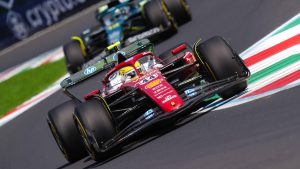
And what of Lewis Hamilton? Sixth place is hardly the stuff of Ferrari legend, but considering he started tenth and was driving a car allergic to downforce, it wasn’t disastrous either. The Tifosi cheered him regardless, because in Monza the man in red matters almost as much as the result. It was a reminder that Hamilton’s move to Ferrari was always as much about symbolism as it was about statistics. At least he still got to stand on the pit straight, drowning in a sea of red flags and smoke, basking in adoration usually reserved for winners.
Closing Ceremony: Records, Regrets, and Ridicule
By the chequered flag, the storylines were clear. Verstappen had rediscovered his swagger, smashing records and restoring order to the championship battle. McLaren had manufactured an internal controversy that could haunt them for months, with Norris’ promoted second place feeling hollow and Piastri’s third dripping with quiet resentment. Ferrari, in their own backyard, played supporting roles in yet another Monza melodrama. And the rest of the grid provided enough oddities—retirements, penalties, and penalties for penalties—to keep the stat-nerds entertained.
The 2025 Italian Grand Prix will be remembered not just as the fastest race in Formula 1 history, but as a snapshot of the sport’s current state of chaos. Ferrari remain romantically tragic, McLaren are dabbling in civil war, Verstappen is back to trolling his rivals, and the midfield is a circus of penalties and broken dreams. For fans, it was a feast: high speed, high drama, and a generous helping of comedy. For Ferrari, it was another painful reminder that the temple may be theirs, but the glory currently belongs to someone else.